Stretching Smarter
Stretching Healthier™Mobility Through Healthier Real Life Movement
WELCOME to Smarter Healthier Stretching on my large no-charge web site DrBookspan. I am a research scientist and clinician in physiology and medicine in extremes of heat, cold, injury states, altitude, underwater, nutritional states, and more. I do studies to find why rehab and training techniques don't work as hoped, and what works better. I hope you will enjoy using my work for healthier life and training to go higher, faster, deeper, stronger, braver, and sometimes funnier.
THIS PAGE shows how to quickly stop some sources of pain and tightness that come from common stretches and habits. Just as there are junk foods, there are junk stretches. Junk stretches are common and packaged to sell, but not healthy. It's not health care if it's not healthy. Start fixing your own pain and tightness yourself, using this summary and others on my web site. Use these techniques to get your life back - healthy, mobile, and happy. Be Prepared To Stretch Your Brain.
More about me in Adventure Medicine and Diving and Aerospace.
SITE MAP. At the bottom of this page, and every page, are main navigation links.
BOOKS
To keep this quick and easy, use this summary to get better now, and get the books to fill in the rest:
Stretching Smarter Stretching Healthier in print edition, eBook and Kindle.
Why Apply Healthy Movement To Real Life
Changing movement habits to healthier, more effective muscle length needed for daily life is different from doing a bunch of stretches, then going back to tight injurious positioning and movement habits all the rest of the day.
Some common stretches emphasize injurious positioning that contributes to tightness, pain, and injuries. Not all foods in the health food store are healthy or do what they claim. The same is true for many stretches.
This is not alternative medicine. This is sports medicine applied to real life - where you actually need it. I like to consider it standard of care, common sense.
I am a researcher who directly studies why conventional stretches are not preventing injuries, and worked years to see what to do instead. I developed re-training methods to change doing a bunch of conventional stretches into two healthy innovations: 1. Restoring length for health and real life function (functional stretches), 2. Getting functional flexibility as a built-in part of your daily ordinary movements - fitness as a lifestyle.
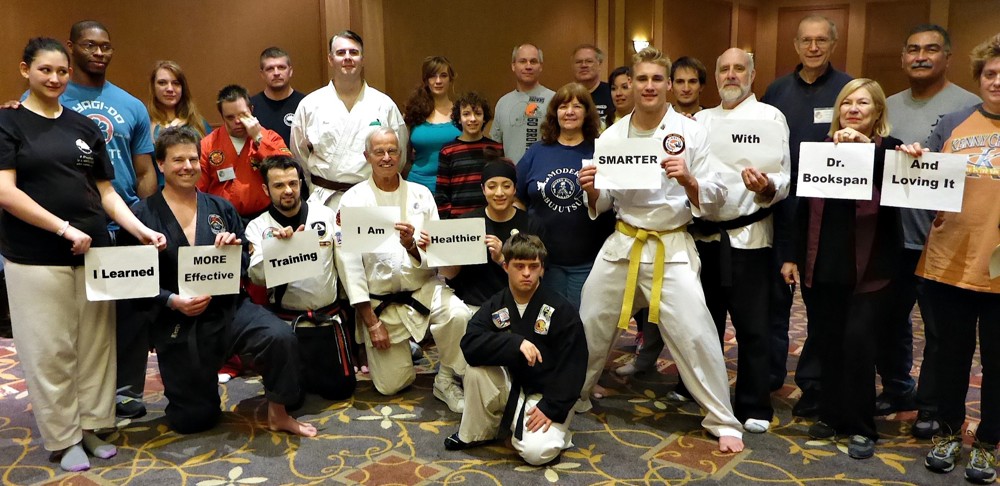
My Students of the Black Belt Hall of Fame Class of 2014
A Letter From Master Hiron John, President of INTERNATIONAL LINKED TAEKWON-DO, 7th Degree Black Belt:"Thank you for your kind words of wisdom in at the Black Belt Hall of Fame event, I have been applying the stretching methods you taught and have felt the release in my back to the extent I am able to train again.
"We have started implementing your stretches in our classes and are noticing the effects in our students, particularly with regards to their improved posture and movement ability.
"Your books are great; an excellent reference tool. They also exercise the mind by making me think."
Regards, Hiron
Do Stretches Fix Injuries?
Flexibility training is often thought to reduce risk of getting an injury. The actual number of injuries show that stretching isn't as preventive as hoped.
A main reason seems to be how people stretch, then how they move during exercise and daily life.
People often stretch using the same faulty movement habits they use all day. They may keep an area shortened or tightened even while they are stretching, or use an injurious or ineffective joint angle while stretching.
Instead of spending your day bent over a desk and steering wheel, then going to a gym or class to repeat the same forward bending, use this article to see what helps to restore healthy muscle length and movement ability. You need to use your brain not only do a bunch of motions because "everyone stretches that way" or because it looks cool.
Instead of doing a bunch of artificial strained movements called stretches and exercises, check how you move, bend, sit, reach, and live in real life. Stretches should be functional, which means how you move in real life.
Just as not all foods are necessary or healthy, neither are some common stretches.
Stretches That Perpetuate The Same Painful Posture and Movement Habits You Started With
After rounding forward all day over the computer, desk, steering wheel, handlebars, and backpack, more forward rounding for stretches and exercise is not healthful or needed.
A habit at the root of much pain and tightness is that many people do most or all of their stretches by bending forward:
They stretch hamstrings by bending over forward or by sitting bent forward
Bring knee to chest
Hang forward at the waist or hips for "hinges"
Bring the arm forward across the body
Lunge bent forward, instead up upright
Most Pilates, fitness class, and yoga moves emphasize forward bending. Several back pain articles on this web site describe problems that this much forward bending causes to the muscles, bones, and discs of your back.
There are many more examples.
Forward stretching does stretch your back, but back muscles are often already too long and overstretched from a lifestyle of bending forward. The muscles in front - the chest and the front of the shoulder - get shorter and tighter. You would get a nice stretch for the lower back that is not hard on discs, each time you did good bending instead of bending forward. See the Fix Back Pain pages for good bending examples.
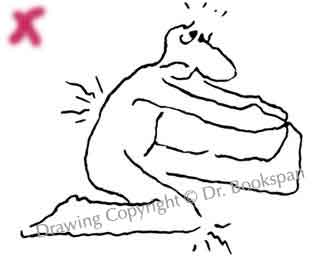
After bending forward over a computer all day, you don't need more bending forward and rounding your back as a stretch.
Do You Need To Warm Up Before All Stretching and Hold Every Stretch 30 Seconds?
Good range of motion helps normal daily life. You need to crouch to retrieve things, step up a doorway, reach in cabinets, and do a variety of ranges and movements all day every day for normal healthy lifestyle. You need to have built-in range already and be able to stretch to these ranges without elaborate preparation. If you are so tight that you would strain or tear without warming up first, every time you moved in real life, you are not healthy and changes are indicated so that you can move spontaneously in healthy ways.
Over years of collecting patient results and in actual studies, we find that "moving stretches" are also effective as a stretch, as a movement re-trainer, and to help quicken the body's normal repair of damaged areas. Safe moving in needed ranges while maintaining healthy specific stretch positioning makes effective stretch, loosens tight areas, and helps rehab damaged areas, as long as stretch range is less than any pain or "yanking" feeling on the damaged area.
In some cases, holding stretches at maximum range, popular in yoga, restricts circulation. Moving stretches, so far, seem good for circulation.
The Results Are Common
People spend much time doing stretches that add to the problems they started with.
They lose the flexibility needed to simply stand up straight without strain.
They may get chronic low-grade aches, injury, and wear and tear from habitual unhealthy positioning.
What To Do
Stretching (range of motion) is most important during all you do in your daily real life. You need stretches that teach and practice the same healthy positioning you need when you bend for things, reach, pick things up, dress yourself, do fun activities. All your range of motion for these things needs to be healthy positioning - not bent over, or with one segment twisted, or slouching under body weight, as practiced in most conventional stretches.
You need to know how to move one part while the REST of your body is in healthy comfortable relaxed position. It is common to forget that during conventional stretches, the rest of you is often in the silliest positions that don't benefit health, and that practice and reinforce unhealthy, tight, contorted posture, that don't transfer to real life when you need to stand, and balance, and stabilize the supporting limbs, while you do what you like to do.
Dr. Bookspan's SIX QUICK STRETCHES
To help with the above two problems and others, I developed a set of SIX QUICK STRETCHES that incorporate balance, knee, ankle, and hip stabilization for healthy standing, teach healthier upper body positioning, and work muscles in the way you need for more range of movement, balance, joint health, spine positioning, and movement.
These SIX QUICK STRETCHES can be done one after the next while balancing on one leg first. Then all repeated on the other leg.
The entire sequence takes less than three minutes total for both legs and gets a fairly comprehensive stretch range, plus strength, stability, joint alignment practice (if you use it properly for that), and balance.
Do these every day. You can do them several times a day if that helps you. Do these instead of conventional "bending over" stretches. To prepare for sports activities, do these right after your warm-up, which can be a dozen or so pushups, for example. You need to have healthy range of motion for a variety of normal events without elaborate warm-up. You shouldn't have such restricted range that you tear something when you tie your shoes or crouch to pick up something from the floor.
These are appropriate for all ages. Use your smart judgment. If balance is poor, these are especially needed to help regain balance, which is a "use-or-lose" ability, just like most other skills. Practice safely with no trip hazards around you. If needed, have a support nearby, not to hold on to continually, but for safety if needed, and to check position. If it is the case that you cannot stretch easily without holding onto something, then you really need more balance and strength so that you can stand and balance without holding on. These SIX QUICK STRETCHES combine many needed skills for healthy daily life while moving.
Don't regard these as mere stretches, just to check off on a list. Use each to relearn how to hold healthy position of neck, spine, hip, knee, and everything else while moving. Short descriptions are included below. Get started and do these everyday. Get the books to learn more.
Thank you to my student Tony who demonstrates in the photos below. I took these photos at one of my workshops at a martial arts conference. He had never met me before. He had never tried yjese before. He just bravely volunteered for photos in front of everyone:
Six Quick Stretches
1.
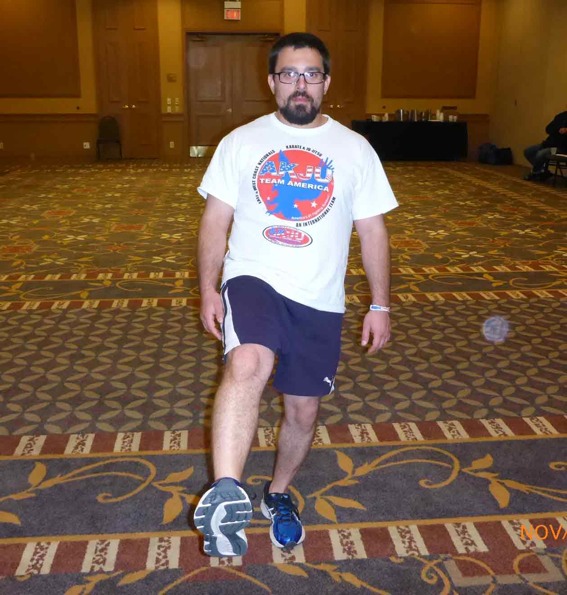
1. Standing Hamstring Stretch
For the leg you are stretching:
Lift one leg straight in front of you until you get desired stretch on the hamstring of that leg. Don't round your back or hunch your shoulders. Pay attention to hold relaxed upright healthful body position.Pull the leg higher with your hands if desired, eventually training flexibility plus strength and ability to raise leg high without hands.
For the REST of your body, try the following:
Position your foot of the leg you are standing on, to face straight ahead, not turned out. In general, whichever direction your foot faces, keep the foot and knee facing in the SAME DIRECTION so that you are not twisting at the knee joint. Use your sense of body position, or watch in a mirror to see and feel if you are slouching at the knee to cause your knee to rotate inward or angles inward. Both these slouches contribute to knee pain and excess wear.
Notice your foot and arch. If you slouch so that your foot flattens toward the floor, use foot and ankle muscles to raise your arch to neutral. Make sure you do not flatten your arch and foot against the floor to help balance. Maintain your arch, and increase balance sense with healthy foot placement.
Keep your body weight on the entire foot, pushing more back to the heel for more stretch.
Keep your hip vertical, not curling under you. Allow the front of your pelvis and hip of the standing leg to get a needed stretch. If you curl the hip under, you are not really stretching the hamstring of the lifted leg as much as you think. and you lose a valuable stretch of the front of the hip and thigh of the standing leg.
Breathe in and out easily and normally while you adjust to healthy position and learn it.
Hold a few seconds then without touching your foot to the floor, go right to Stretch Two, next
2.
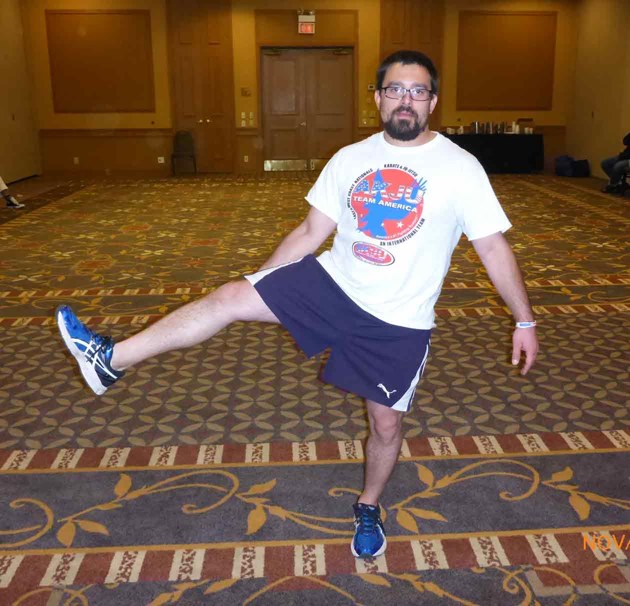
2. Standing Side Stretch - leg abductors, groin
For the areas you are stretching:
Lift the same leg straight out to the side.
Don't round your back or hunch your shoulders. Hold relaxed upright position.
For the rest of your body use the following:
Keep the standing foot and kneecap facing in the SAME DIRECTION so that you are not twisting the knee joint. Watch in a mirror or use your sense of body position to feel if you are slouching at the knee that that your your knee turns inward.
Notice your foot and arch. Use foot and ankle muscles to lift your arch to neutral. Make sure you do not flatten your arch and foot against the floor to help balance. Keep your arch and increase your real balance using your muscles.
Breathe in and out normally while you adjust to healthy position and learn it.
Hold a few seconds then without touching your foot to the floor, go right to Stretch Three, next
3.
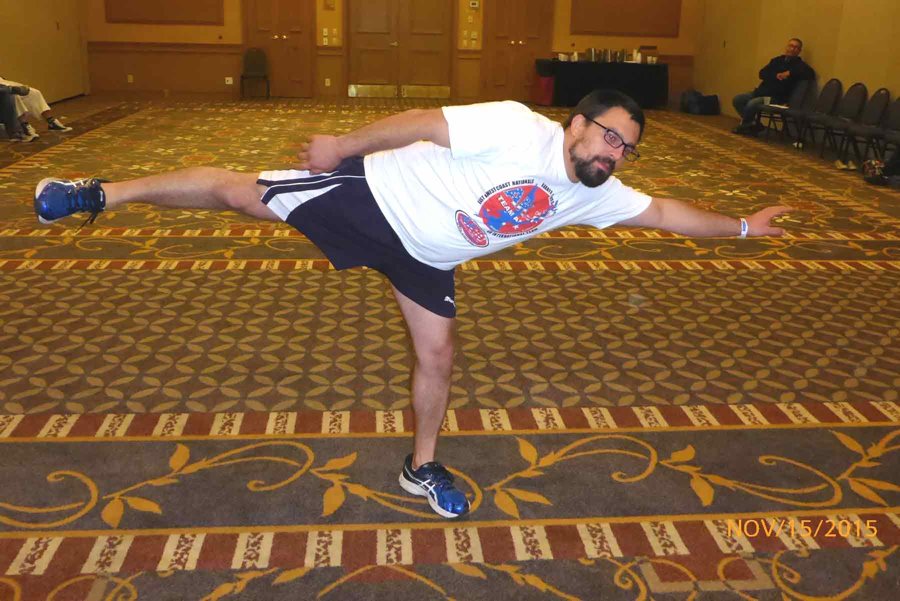
3. Standing Side Stretch - Hip, leg abductors, groin, upper body, shoulder stretch - adding strength and balance
For the areas you are stretching:
Keeping the same leg lifted straight out to the side. tilt your entire body to horizontal
Lift your lower arm UP to horizontal. Put the top arm flat down to your body.
Keep lifting your leg higher to horizontal
Notice your upper body. Hold straight and flat, not rounding forward. Don't bend the leg at the hip. Extend at the hip to straight from body to leg.
For the rest of your body use the following:
Keep the standing foot and kneecap facing in the same direction so that you are not twisting the knee joint.
Use foot and ankle muscles to lift your arch to neutral. Do not flatten your arch and foot against the floor to help balance. Keep your arch and practice balance using your muscles.
Breathe in and out while you adjust to healthy position and use your brain to recognize it.
Hold a few seconds then without touching your foot to the floor, go right to Stretch Four, next
4.
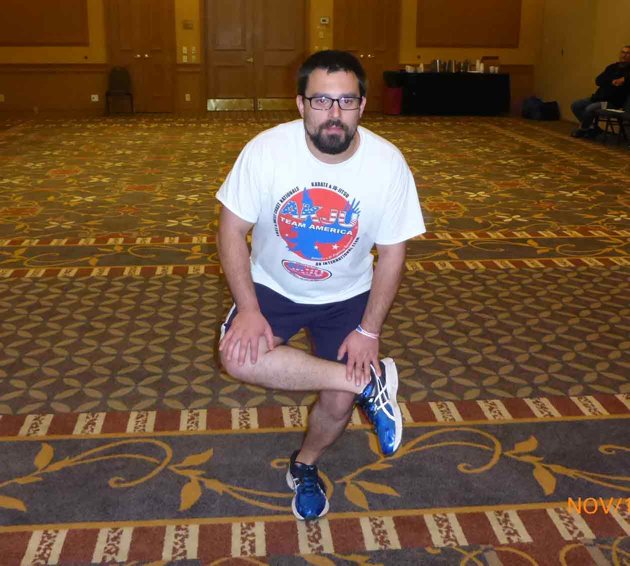
4. Standing "Shoe" Stretch - Posterior Hip, Achilles, Balance
For the areas you are stretching:
Standing on the same leg, cross the other one as if tying your shoe.
Keep your upper body as upright as you can, not rounding or leaning forward.
Keep your body weight on the entire foot, pushing more back to the heel for more stretch.
Bend your knee to go lower. Eventually to touch the floor with your hands. However the point is to get useful stretch, not to touch the floor. The position you use is what you need, not to check off a rule.
Use this every day to put on and take off your shoes and socks, trousers, and to tie your shoes.
As always, for your entire body keep healthy positioning:
Keep the standing foot and kneecap facing in the same direction so that you are not twisting the knee joint.
Use foot and ankle muscles to lift your arch to neutral. Make sure you do not flatten your arch and foot against the floor to help balance. Keep your arch and increase your real balance using your muscles.
Breathe in and out while you adjust to healthy position and use your brain to know that you are learning it.
Hold a few seconds, then without touching your foot to the floor, go right to Stretch Five, next
5.
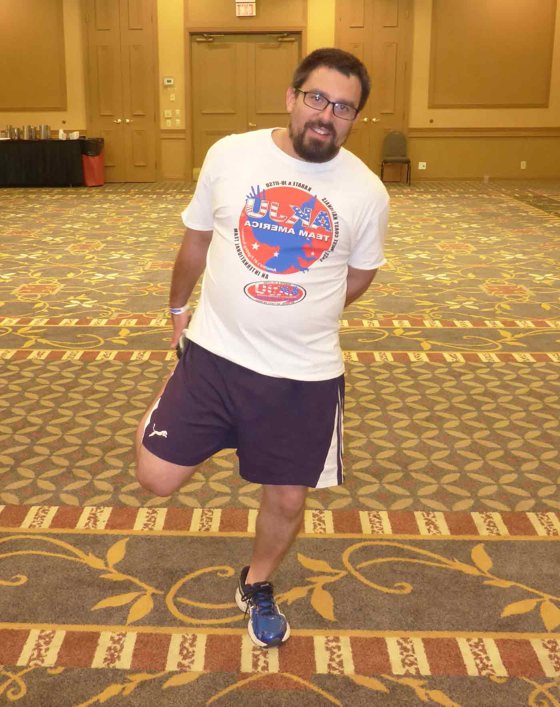
5. Standing Neutral Spine Quadriceps (entire front thigh) and Anterior Hip Stretch
For the areas you are stretching:
Standing on the same leg, lift the other one in back to your hold in hand.
Keep your upper body as upright as you can, not rounding or leaning forward.
TUCK the pelvis to neutral spine so that it does not tilt, but is vertical. Pushing the hips forward is not tucking. Changing from a tilted pelvis to vertical is the action needed. It reduces a large inward lumbar curve to a smaller one. Pushing the hips forward is the opposite and increases the angle of the lower spine. If it causes pain, you are doing it wrong. Check in a mirror what you are doing compared to what you think you are doing. Use the photos and videos on the neutral spine/ fixing swayback page for reference.
If you do not use neutral spine, you will miss the majority of this stretch and also use usefulness of it to teach you healthful spine positioning for life. If you do not know about neutral spine or are not sure how to do it, use this page on Fixing Swayback.
As always, for the rest of your body use the following:
Keep the standing foot and kneecap facing in the same direction so that you are not twisting the knee joint.
Use foot and ankle muscles to lift your arch to neutral. Make sure you do not flatten your arch and foot against the floor to help balance. Keep your arch and increase your real balance using your muscles.
Breathe in and out while you adjust to healthy position and use your brain to know that you are learning it.
Hold a few seconds then without touching your foot to the floor, go right to Stretch Six, next
6.
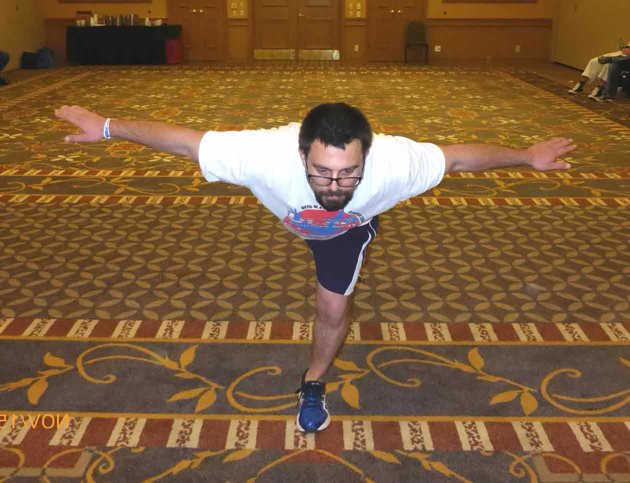
6. Standing Posterior Hip Stretch, Back and Leg EXTENSORS, Upper Back, and Anterior Hip Stretch
For the areas you are stretching:
Standing on the same leg, let go of the foot in your hand, and continue to hold it up while straightening the leg.
Come to completely horizontal position from head to foot.
Keep your upper body uplifted, not rounding downward.
Put both arms out to the side at horizontal position. Feel how the shoulders stay relaxed, and in healthful neutral position, not lifted or rounded.
Use this knowledge to be able to raise both arms overhead while keeping shoulders in position - not hunching upward or rounding.
Don't lift arms upward without learning healthy shoulder position first.
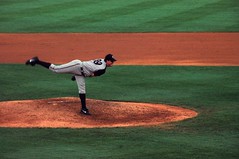
NOTE: The muscles that EXTEND the leg and body are important but usually neglected muscles. In most conventional stretches, bending forward, or keeping the hip bent is emphasized. You will know if you stretched and used your back and leg extensors by doing this, if your backside is pleasantly sore from exertion the next day after learning this.
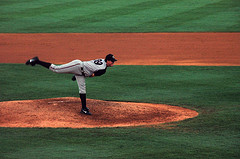
One of many real life applications of Stretch 6
Thank you to John Harwood for baseball photo http://farm1.static.flickr.com/68/208081960_82cf8837bd_m.jpg
As always:
Keep the standing foot and kneecap facing in the same direction so that you are not twisting the knee joint.
Use foot and ankle muscles to lift your arch to neutral. Make sure you do not flatten your arch and foot against the floor to help balance. Keep your arch and increase your real balance using your muscles.
Breathe in and out while you adjust to healthy position and use your brain to know that you are learning it.
Hold a few seconds then stand with both feet on the floor, and go back to Stretch ONE, above, to repeat the sequence on the other leg. Repeat as needed.
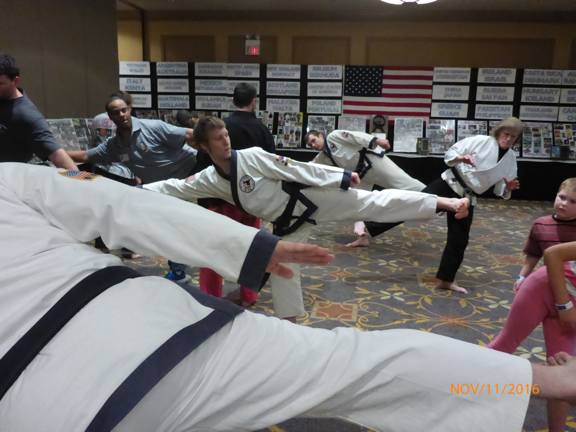
My Black Belt Hall of Fame Class of 2016 practicing Stretch 3. Standing Side Stretch.
My Black Belt Hall of Fame Class of 2016 practicing Stretch 4 Standing "Shoe" Stretch - Posterior Hip, Achilles, Balance.
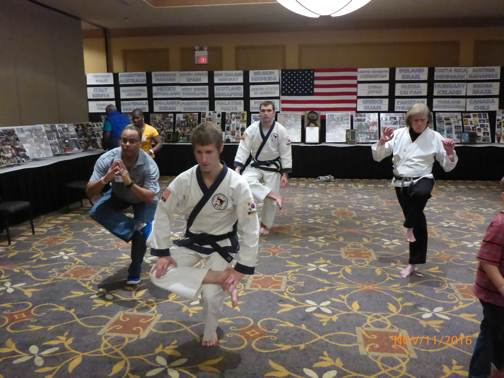
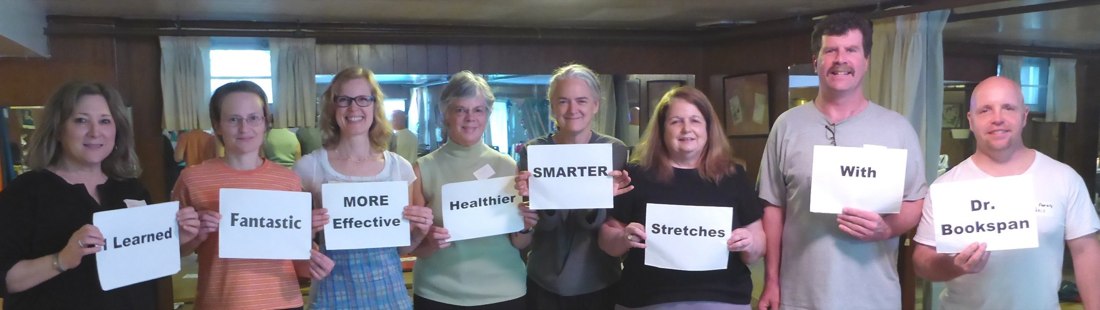
Students of Stretching Healthier, April 2016
Cathy Sander (third from left in above class photo) writes:
"I had years of Physical Therapy, chiropractic and massage. They were all helpful, but I was a slave to them. Plus, I still hurt. Dr. Bookspan got to the root of the problems in one class. She showed me how to move and use my body to stretch and strengthen WHILE I participate in everyday activities. I can now spend more time moving AND sitting (reading, art, paperwork, etc.) without fear of debilitating neck and back pain. I now know WHY I was having the pain and WHAT TO DO to correct the problems. Priceless."
"Dr. Bookspan responded to our feedback and tailored the class to suit our needs. She worked with individuals and the group. She did all that while making the class FUN! She also sent a follow-up email summarizing everything we learned in class with page numbers corresponding to the book. So helpful.
Summary For Healthier Smarter Stretching
Understanding the greater picture of why a stretch is applicable to daily life or not, tells you more than just a list of where the stretch "targets."
Check your list of exercises and stretches. The majority of conventional stretches bend forward - sitting, lying, and standing bent over. Doing a few extension stretches the "other way" does not cancel the great majority of the time that people spent training a bent forward position in daily life. Many people sit at work for many hours a day then stretch with many bent forward positions. More forward bending is not needed. Stretching needs to use your brain.
Stretching just to make joints go to greater range does not automatically translate to healthier use of the joint during real life movement.
For many people, good flexibility means bending forward to touch the toes. Many of these same people don't have the flexibility to stand up straight. Their body and movement patterns are trained and tightened to a bent forward position. They cannot straighten out enough to comfortably lie flat without a pillow under head or knees, or stand with their back against a wall with the back of their head touching the wall without craning their neck or lower back. Their back and shoulders are too rounded and lengthened. They stand, walk, and do all activities at joint angles that impinge, grind, rub, and stress. This is functional tightness. It is a common consequence of modern exercises even posture exercises.
The idea of stretching can be reframed as retraining to so you know what is healthy and unhealthy movement, and that you no longer stand, sit, and move with strained unhealthful positioning. it doesn't happen by itself or through posture exercises.
When you stretch one area, don't wreck the others.
Bad body ergonomics of rounding forward is a common cause of upper back and neck pain, often mistaken for "stress" or arthritis or whatever else is on the x-ray but not the main or even related cause of pain. Watch people at the gym and in life. Notice how often fitness publications ask you to practice being bent over. Instead, get functional stretching.
Use good healthy movement retraining (Functional Stretching), described in Stretching Smarter Stretching Healthier, to regain needed muscle length for healthy positioning for all you do, not just during your few moments of stretches. That is how stretching can benefit you in your daily life.
Use these easy principles when you move in real life and when you stretch instead of merely doing reps of stretches.
Feel better starting now.
Simple and Different -
These Concepts and Methods Work Only As Written and Intended
It's been said, "Any man who afflicts the human race with ideas must be prepared to see them misunderstood" Even so, please don't change my work. This is different and works differently. That is good.
Send A Stretch
If you want to throw a few dollars toward keeping this site running or to say hello, that's great! Secure through PayPal. Thank you!
You can help this site without donating - Use the links from the BOOKS page and click anything from there to Amazon to get anything you want whether it's my books or not, from song downloads, health and medical equipment, home stuff, movies, whatever. Amazon will send me a small percentage of purchases (not clicks) - anonymously. Your name is never given to me. Larger purchases send me more, so get your next computer or playground this way. If you get a lot of smaller things, they also give me a bit more. Thank you for helping this web site by shopping for things you get anyway. Use the links for next time you shop, too. Have fun.
![ALT =[“Healthy Martial Arts by Dr. Jolie Bookspan. Training for all athletes in all sports, body and mind. More on author web site http://drbookspan.com/books”]](images/CoverHealthyMartialArts.jpg)
![ALT =[“Fix Your Own Pain Without Drugs or Surgery by Dr. Jolie Bookspan. Fix causes using scientific methods you can do yourself. Available from author web site http://drbookspan.com/books”]](images/FixPainFrontCover.jpg)
![ALT =[“Stretching Smarter Stretching Healthier by Dr. Jolie Bookspan. Effective quick methods for healthier range of motion during daily life, sports, exercise, and at home. Available from author web site http://drbookspan.com/books”]](images/StretchBookCoverWEB.jpg)
![ALT =[“The Ab Revolution 4th Edition by Dr. Jolie Bookspan. Replaces all eariler editions. Available from author web site http://drbookspan.com/books”]](images/CoverAbRev4.jpg)
![ALT =[“Health and Fitness in Plain English - How To Be Healthy Happy and Fit For The Rest Of Your Life by Dr. Jolie Bookspan THIRD edition. Available from author web site http://drbookspan.com/books”]](images/CoverH&FLowRes.jpg)
![ALT =[Diving Physiology in Plain English - new eighth edition 2021 with Blue Cover and white text: by Dr. Jolie Bookspan]](images/CoverDivingPhys%20eBookLR.jpg)
![ALT =[“Diving and Hyperbaric Medicine Review For Physicians Board Exam Guide by Dr. Jolie Bookspan. Available from author web site http://drbookspan.com/books”]](images/coverdocbook.jpg)
More on the BOOKS page.
Don't worry about people stealing your ideas. If your ideas are any good, you'll have to ram them down people's throats.
- Howard Aiken
That said, Be Healthy - Respect Copyright
Information, drawings, and photos are © protected copyright. To cite this article or any parts, put author Dr. Bookspan and link to this site DrBookspan. A suggestion to get my books is also nice. No Derivative Works License means no changes to content, wording or links.
Drawings of Backman!™ copyright © Dr. Jolie Bookspan from the book Stretching Smarter Stretching Healthier and others.
LEGAL info here.
If this article fixes your pain, send it to a friend (the article, not the pain). "Make health contagious."
If you hate it, send it to someone you don't like.
HOME || The Ab Revolution™ || Academy || Adventure Medicine || Bio || Books and eBooks || Bookspan Basics || Classes || Diving Aerospace & Hyperbarics || Emotional & Mental Fitness || Fix Pain Articles || Fitness as a Real Lifestyle || Hamstrings and Back Pain || HUMOR - Fixa U Dept of Silly Syndromes || Karate || Kickboxing || Lower Body Revolution (tm) || Nutrition || Projects for World Health || Patient Success Stories || Rare Photos of Early Work || Stretch Class Syllabus || Sitting Healthier || Thai Massage || The Fitness Fixer || Yoga Without Dogma