Kinds
of Hyperlordosis
In
my research work, I have identified several kinds of hyperlordosis, all
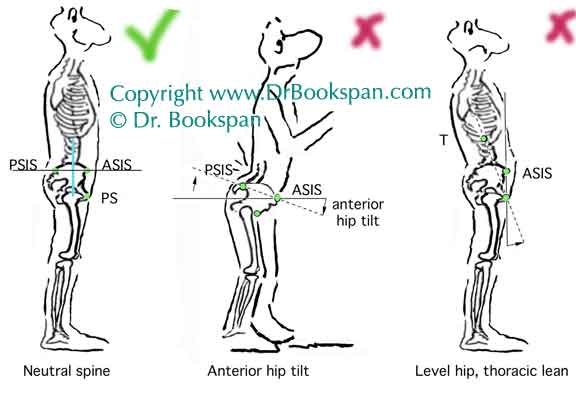
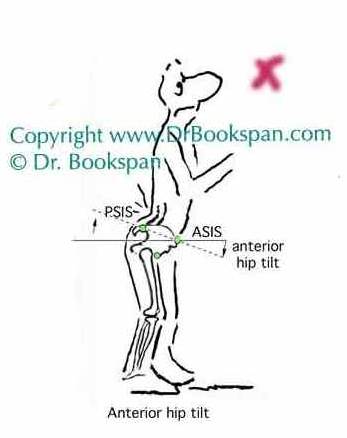
the same concept. It's good to stay simple, so here is a summary drawing.
#1 Neutral Spine, #2 Anterior Hip Tilt, #3 Upper Body (thoracic) Lean:
Technically
the word "lordosis" originally meant the normal inward curve of
the lower back. It has commonly come to mean too much inward curve, allowing
the lower back to sway. The technical word is hyperlordosis, meaning too
much lordosis. Hyperlordosis creates much back pain including facet pain,
which is pain and damage to the facet joints that hold your vertebrae together.
The facets are the joints that your body weight presses on when you let
your back sway or arch.
Can
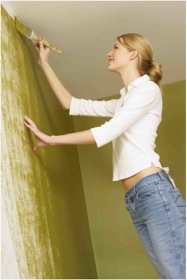
You See Swayback (Hyperlordosis / Overarching) In Real Life? Compare
the photo below to the drawing above:
Now
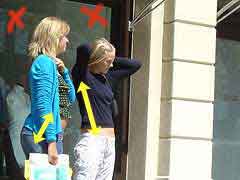
can you see hyperlordosis in real life? The photo shows #2 Anterior Hip
Tilt, #3 Upper Body (thoracic) Lean.
Can
You Tell If You Are Standing in Swayback? (Hyperlordosis / Too Much Inward
Lumbar Curve)
Check
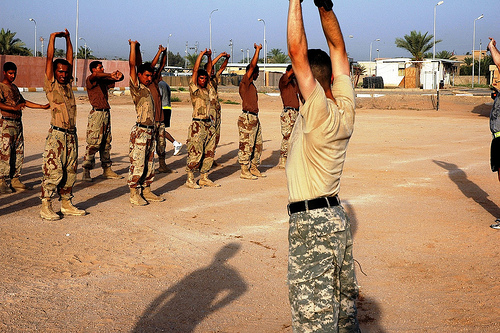
- When you stand. When you look up. When you reach up. When you
carry a load in front like a laundry basket, chair, or child. When you carry
a backpack in back.
Check
to see if you can pull you shoulders back or drink a glass of water or take
a photo without leaning backwards or increasing the inward curve of the
lower back.
This
bad posture is, surprisingly, taught in many gyms, or done deliberately
mistaking it for a cute posture. It is unhealthful and injurious bad posture
that interferes with healthful movement and creates much lower back pain.
If you get an achy back during these activities, check for swayback and
fix it.
Hyperlordosis
(Swayback) Is the Cause Of Much "Mystery" Pain
Hyperlordosis
pain does not often show up in X-rays or scans, and keeps coming
back no matter how many exercises, massages, or "adjustments"
you get. Many people get repeated injections, but the pain keeps coming
back. The reason is that they return to swayback
posture.
You'll
see the swayed hyperlordotic spine posture in an astonishing number of fitness
videos, magazines, books, and classes. They may say, "keep neutral
spine" but they arch their back and stick out their behind in dozens
of exercises from leg lifts, to lifting weights, to bouncing around in aerobics.
It
is not neutral spine to have a large inward lumbar curve. It is not "just
the way you are made." It is bad posture that you can change.
Do
you know why there is often a foot rest in pubs? People who arch their lower
back during long standing often get back pain from it. They feel better
when they put one foot up on the foot rest. The reason putting one foot
up on the low foot rest reduces the pain is that you unwittingly reduce
the large lower back arch. You don't need a foot rest to reduce the arch.
Change your spine positioning yourself and
stand with neutral spine. Then you won't have the arching that causes the
pain.
On Apr 6, 2017, Jack Ryder wrote:
"This
quotation seems meant for you!!! - 'Talent hits a target no one else can hit;
Genius hits a target no one else can see' - Arthur Schopenhauer"
Don't
Tilt The Pelvis, or Push Your Backside Far Toward the Back
People
hear they need a small inward lumbar curve, so they make a big one.
They tilt their pelvis forward in front with
the backside tilting out in back. You can see this unhealthy
practice in many fitness publications, videos, and gyms. There is supposed
to be a small inward curve to the lower back for shock absorption and protection
of the discs. But only a small one. Increasing the inward curve does not
help more. It causes pain of its own.
You
will have a healthy lumbar curve without tilting your pelvis.
The pelvis should be vertical - from the crest of the hipbone down to the
top of the leg bone - like the seam down the side of pants or shorts. The
seam should not tilt forward at the side of the hip.The belt-line should
be horizontal. Some people visualize the proper pelvic angle by thinking
of a bucket full to the top with water. Hold the bucket upright and vertical
so the water doesn't spill out, not tilting forward.
Notice
and Correct If You Lean Your Upper Body Backwards
Even
if your pelvis is vertical and your belt-line level, leaning the upper
body backwards increases lumbar curve, causing swayback. I named it
"Thoracic Lean" for lack of a better name. (I am
still working on a better name.)
Leaning
the upper body backward is common. There are several reasons people
do it. Mostly it is simple slouching. Often people do it deliberately,
mistakenly thinking they are "standing up straight" -or "bringing
shoulders back" but they are actually leaning the entire upper
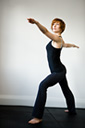
body backwards. Both photos below are examples of an upper body (thoracic)
lean. In the yoga photo, the model is not only leaning the upper body
backwards, but tilting the pelvis forward, described previously.
How
to tell if you lean your upper body backwards? Look at yourself sideways
in a mirror. Look to see the position of your upper body relative to an
upright. Make sure you notice what leaning backwards feels like. Taking
side-view photos also helps to see where your body is in space in relation
to where you think it is. To fix leaning backwards, bring your upper body
forward enough to become upright. That uses abdominal muscles, not shoulders
or neck or head.
Feel
This Technique Work
When
standing, your pelvis should be vertical, not tilted, from the top of your
upper leg bone to the middle-point of the crest of your hip. Your upper
body should be upright and vertical. Once you understand this, and can do
it, use the following test and technique to feel it working against resistance.
This
is not an exercise that fixes any injury or pain. This is a way to check
how well you have already reduced your swayback and can use neutral spine
during activity.
When
you are already using neutral spine and press against a wall or object to
be pushed, notice that there is no compression or pain in the lower back,
and you gain a stronger pushing action in the arm:
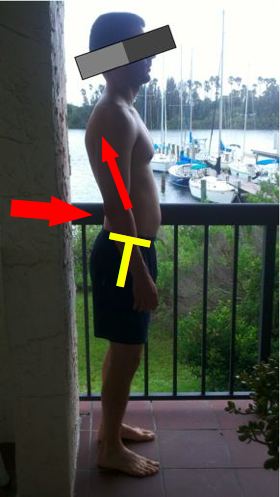
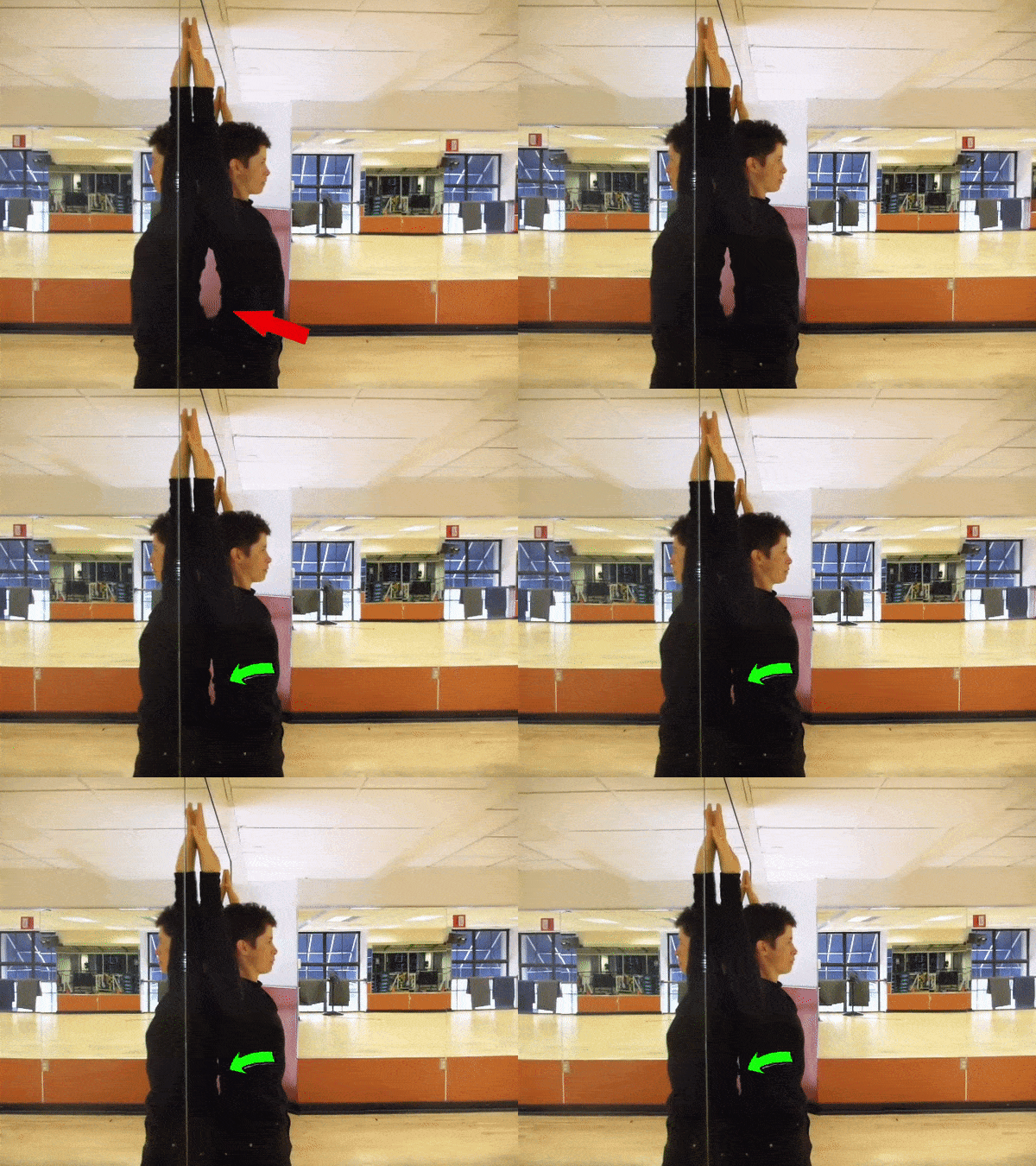
-
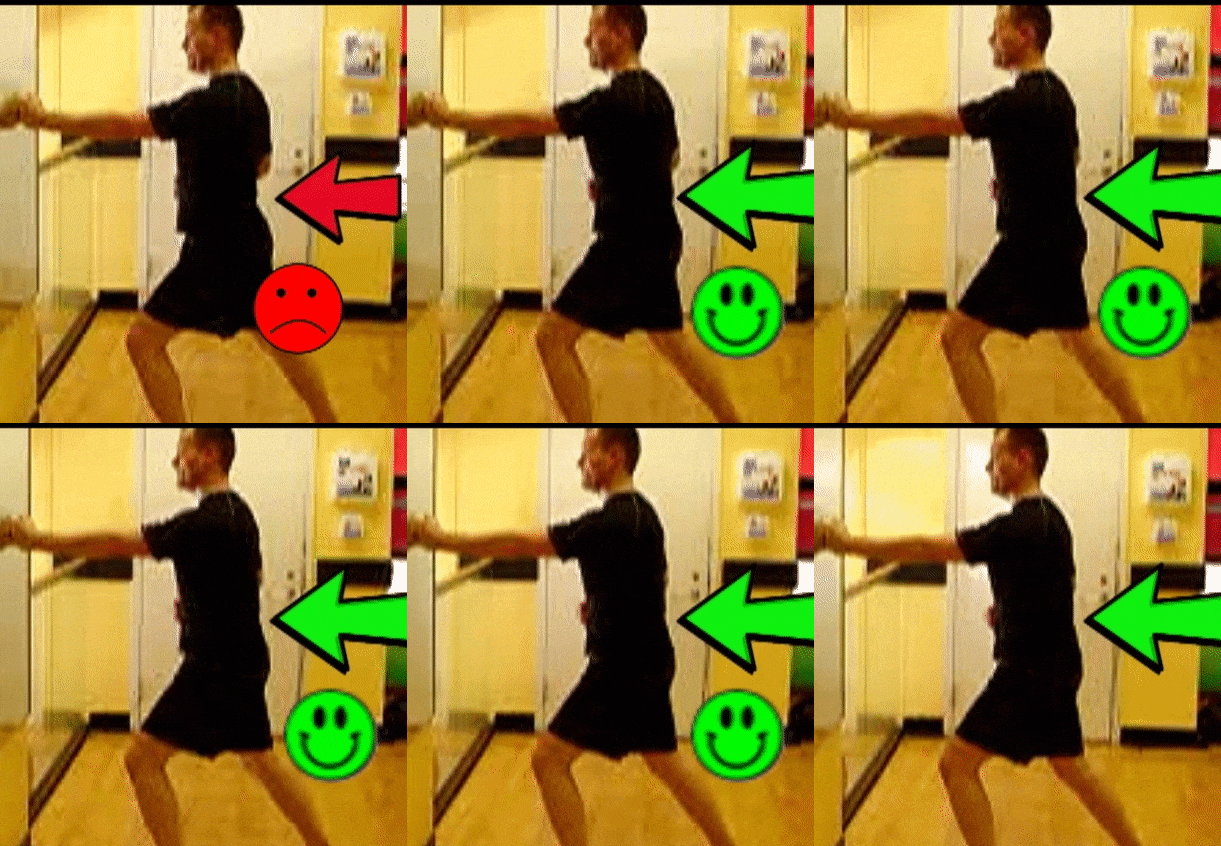
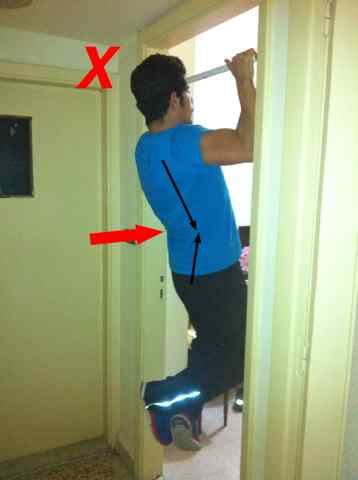
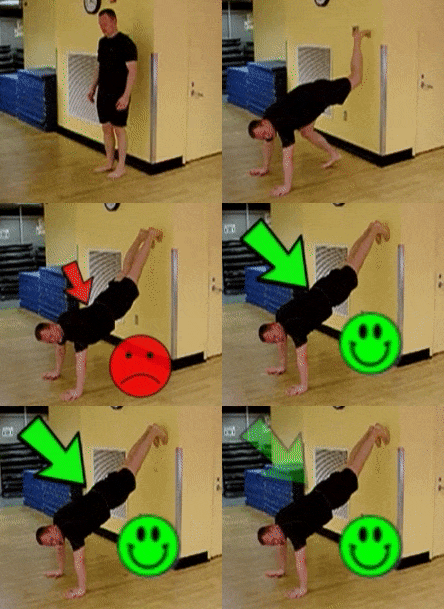
Stand
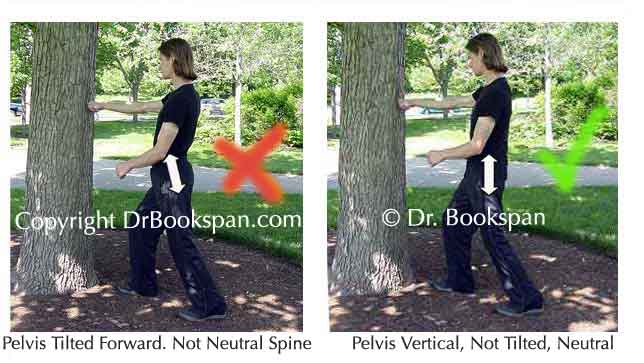
facing a wall, or any sturdy surface as in the photo above, with one arm
outstretched. Press the knuckles of your curled fist against the wall.
Notice if you stand badly, shown in left-hand photo. See if you can tell
if you tilt your hip out in back, or let your lower back arch inward.
Let your upper back lean backward. You will probably feel pressure in
your lower back (don't do this if you have pain or injury).
-
Now,
change to neutral spine by tucking your hip under to vertical, shown at
right. The movement is like a pelvic tilt or a standing crunch. The arch
in your lower back reduces. The first thing you will notice - if you do
this correctly - is your lower back stops hurting because you have stopped
swayback. You should also notice a stronger push against the wall and
new strength in your arm and upper body. You will feel the muscles in
your trunk and abdomen working. Remember, this is not an exercise to fix
pain. This is a drill to test how well you know how to stop swayback,
and to feel that it is a better spine position for activity.
A
gif should appear below of my student Dennis, Olympic wrestler, demonstrating
changing to neutral spine when pushing against resistance:
See
this video and others directly from my Flickr page, TheFitnessFixer: https://www.flickr.com/x/t/0094009/photos/thefitnessfixer/22991412054/
Prevent
Overarching (Swayback/Hyperlordosis) When Reaching and Lifting Overhead
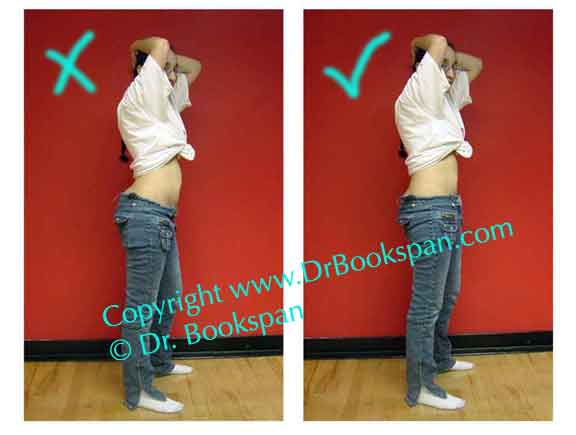
Check
to see if you arch your lower back and lean the upper body backward when
reaching overhead.
You
may be doing this dozens of times daily doing things as simple as putting
things on shelves, pulling off shirts, stretching arms overhead, even combing
and washing hair. Damage accumulates.
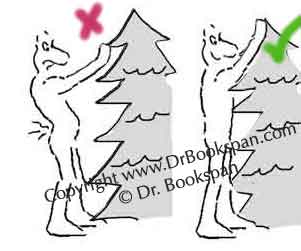
#1 Left
- Leaning the upper body backward, and tilting the pelvis.
#2 Right
- Straightening the pelvis and upper body to vertical
Prevent Swayback / Hyperlordosis When Carrying Loads - Backpacks,
Packages, Pregnancy
-
Loads
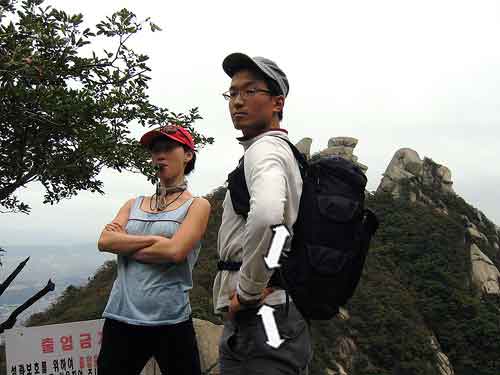
Carried on the Back - Check to see if you increase the
lower spine arch when carrying a load on your back, like a knapsack, or
someone piggyback. Heavy bags and backpacks don't make you arch your back
or have bad posture. Not using your ab muscles to counter the pull, and
allowing your back to arch is the problem. Hold neutral spine against
a posterior load. Your bags will be a built-in abdominal muscle exercise.
-
Loads
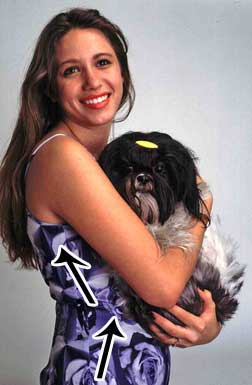
Carried In Front of You - Check to see if you lean your upper
body backward when carrying an anterior load (something held in front
of you), like a chair, a package, a child, pet, a pregnancy, or anything.
Stand upright.
-
Pregnancy
- If you have swayback during pregnancy, it is not true that
being pregnant makes your posture poor. You are leaning the upper
body backward, and/or tilting the hip and pelvis forward. People do this
to try to offset weight in front, the same as carrying a chair, grocery
bag or dog as pictured in the examples below. You do not have to lean
back or tilt your pelvis to carry more weight in front. Use neutral spine
so that your front (ab) muscles offset the weight. Even if it is true
that you are more flexible due to pregnancy, you can (and need to) stand
in neutral spine without leaning backward. Of all good times to prevent
this arching, this is it. Use the same pelvic tilt described above to
change to neutral spine. You do not have to have a backache when carrying
a pregnancy.

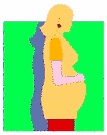
LEFT - Leaning upper body back, pelvis tilted (ouch!)
RIGHT - Upright and neutral
Prevent Overarching (Swayback / Hyperlordosis) When Wearing
Heels and Standing on "Tip-Toe"
Standing
on the ball of the foot, as when wearing high-heels, does not "make"
you stand badly or "arch your back" (stand in swayback or hyperlordosis).
You control your spine and can hold neutral spine the same as during all
other standing, walking, and activity.
People may lean backward and/or increase lumbar arch when they haven't trained
balance and neutral spine. It does not take much training, just knowledge
and doing it.
In
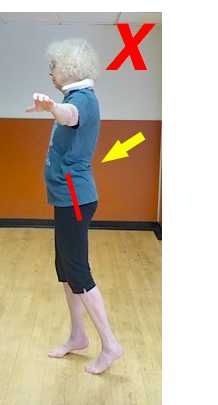
the two photos below, my student Leslie demonstrates standing "tip-toe"
(raised heels).
In
the first photo, Leslie stands swayback (yellow arrow points to area of
increased lumbar compression. Red line shows tilted pelvis).
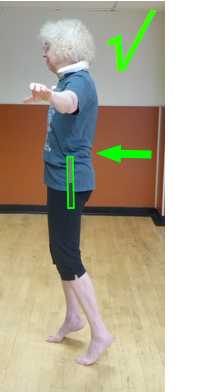
The
second photo shows standing with raised heels in neutral spine. Green line
shows vertical pelvis. One foot is more forward for two reasons - first
so you can see both feet and also that is part of how you walk, while wearing
heels or not. (Note, in the second, corrected photo, Leslie is still leaning
the upper body back very slightly. When you do this, keep upper body vertical
for standing)
Movement
to change swayback to neutral comes from the spine. There is no tightening
of abs. There is no "sucking in," and no "navel to spine."
That is not how you move. Leslie is 75 years old in this photo. See her
video of doing 30 neutral spine pushups on the Fitness
as a Lifestyle page. Scroll down toward the end to see it.
Next
my student Paula:
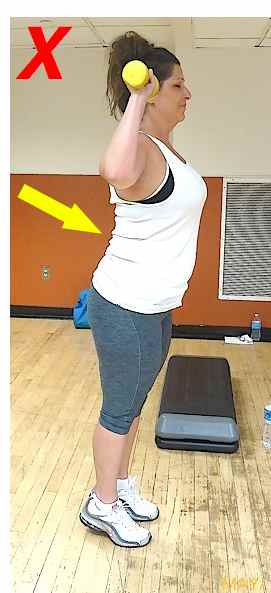
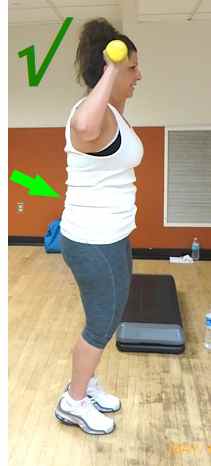
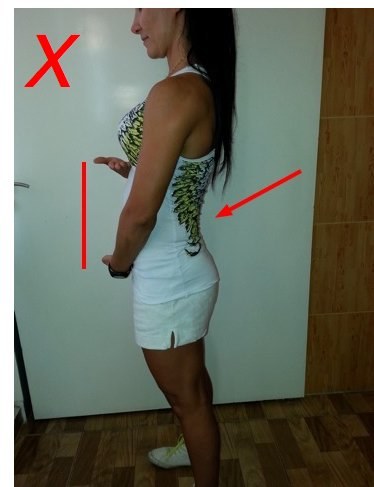
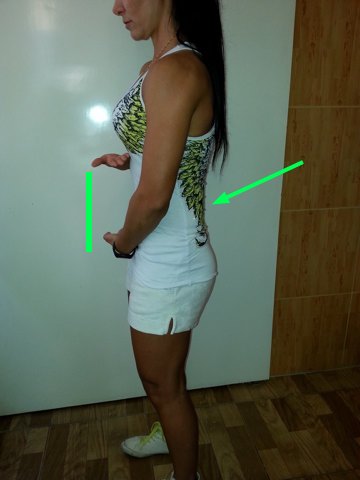
In
the above two photos, my student Paula shows standing in raised heel position,
first with swayback (first photo with red X),
then correcting spine to neutral (second photo with green
check mark). Note that no knee bending is needed. I asked
her to do this for photos in the middle of an exercise class. She had no warning
or prep time. A great student.
Some
People Are Too Tight in the Anterior Hip (front of pelvis) To Straighten To
Neutral
Sometimes,
the front hip muscles and connecting tissue get so tight, that you can't
straighten the hip to stand upright. Then standing and moving is uncomfortable,
but you are also too tight to change to healthier neutral spine, and trying
to use neutral will also feel tight or uncomfortable.
The
drawing below shows the forward bend (flexion) where leg meets body in the
front of the hip. It is increasingly common for people to keep that front
hip area bent for all they do - to walk and move and do exercise. I have
seen people jumping rope and doing standing weight lifting like this, do
entire exercise classes with the front hip bent, walk out of the class,
and never straighten their front hip.
It
is a common assertion that sitting makes front hip tightness (hip flexor tightness).
I am finding,
so far, from preliminary data from studies I am doing that there is a stronger
correlation between tight anterior hip and thigh muscles (hip flexors), and
people who do mostly flexion based exercises, more than from sitting
alone - people who do most conventional exercises of leg lifts, pilates, yoga
and other forward bending systems, and use that same bent posture for all
their exercise. More on this work on my Lower
Body Revolution page.
What
to do if you are tight in the front hip? Stretch the front hip. The stretches
I use are the ones that are the most effective in both stretching the front
hip and thigh and also teach how to use that length with neutral spine. (You
can have a stretchy front hip and thigh and still stand terribly). Two examples
are below:
Use
as much neutral spine as you can. The motion of moving to neutral stretches
the front hip because you stop bending that area and lengthen as far as a
straight position.
When
doing lunges, tuck the hip under until vertical (not pushing it forward),
as described above. When you use neutral during lunges, you will feel a stretch
in the front hip, even standing in a lunge without lowering. That is how you
know you are tucking properly. Then lower until you get the stretch you like
and need. (Not until it hurts).
I
have a large number of fun, good-feeling stretches for the front hip. They
are not conventional stretches, but specifically designed to let you feel
front hip position and muscle length, and how to lengthen it. Some of the
stretches are done standing to get balance and functional practice for daily
movement you actually do, and others are lying down to practice relaxing and
not tightening. See my book Stretching Smarter to
learn many healthy techniques to get needed resting length of the front hip
(and anywhere else needed).
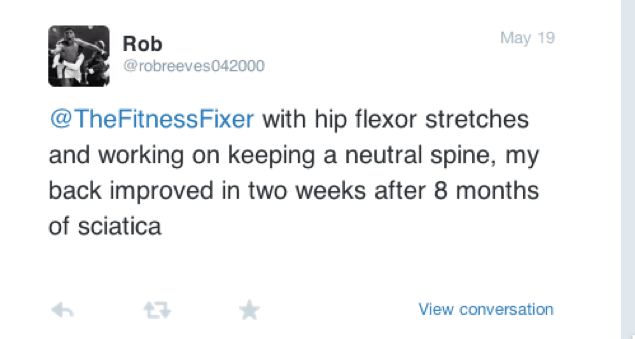
Below
is a nice comment from one of my Fitness Fixer readers. Thank you for smart
use of my work, Rob.
Prevent
Swayback (Overarching / Hyperlordosis) When Sitting
-
Most
people who overarch the lower back when standing feel better to sit down.
Why? When they sit, they round their back reducing the painful overarch.
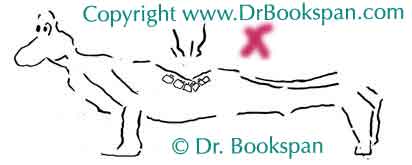
The pain from it goes away. However some people sit with a too-large lower
back curve.
Sitting with too much arch also makes back pain.
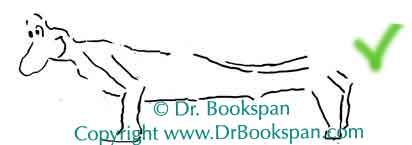
-
Don't
keep a large inward curve of the lower back when sitting. It is not healthy
sitting, any more than rounding forward too much. Use neutral spine for
sitting.
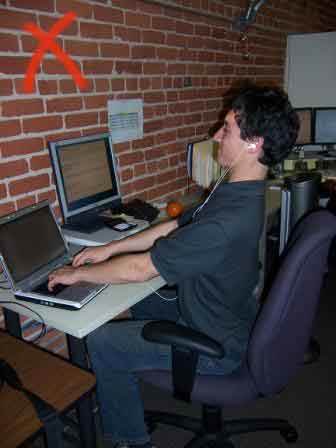
Don't
overdo. Don't sit with increased inward lumbar curve, shown above. That
hurts too.
The
Healthy Sitting article on this web site
tells more.
If
You Don’t Believe That "Tightening" Is Not How to Use Abdominal
Muscles, Try The Following:
1.
Tighten your abdominal muscles, as commonly taught. Press your navel to
your spine. Tighten the entire area. Now hold that and try to breathe in.
Note that tightening inhibits breathing. Belly breathing is prevented. You
could take half-breaths high in the chest with tightened abs, but that is
not a healthy or relaxed way to breathe and go about your life.
2.
Next stand with overarched lower spine posture. Tighten your abs and surrounding
musculature. Note that the lower spine angle does not change.
3. Stop tightening the area so that movement is now unrestricted. Use easy
relaxed movement of your spine and hip to remove the hyperlordotic arch,
straightening your posture. Understand that "using your abs" means
using them, like any other muscles, to move your body.
Instead of lying on the floor and hunching forward to exercise your abs,
train your abs to work the way you really need them - standing up. By using
your abdominal muscles to hold healthy spine positioning during all your
activities, you will get free exercise, and abdominal and core muscle training
that benefits your life and back. Strengthening
abs will not help your back. Using them to keep healthy torso posture is
how it works.
Arching (Back Extension) By Itself Is Not Bad
Extending
your spine to the back to create needed range of movement, for example,
a big tennis serve, is not injurious by itself. The problem is compressing
an overly-extended segment of the spine under load. Don't allow your lower
back to fold backward under your upper body weight. Instead, use your abdominal
muscles to keep the load lifted, with more space in the posterior spine.
By holding your upper body weight upward with your abdominal muscles, you
can lean and extend back without weight shifting and pressing downward onto
your lower back. Supported extension, compared to sagging in hyperlordosis
are often confused, leading to rules that you must never extend the spine,
rather than understanding the concepts and creating healthful movement.
Healthful back extension is an important and good-feeling exercise for back
health and is covered in the back pain article
on this web site (and my books).
Why
Don't Crunches Help This?
It's
practically universal to see a gym full of people doing crunches, then stand
up and walk away with arched backs and no use of abs, or knowledge that
you are supposed to use abs standing up.
1. Crunches don't work your abs the way they are needed to work for real
life.
2.
Crunches don't train or teach you how to use your abs the rest of the day.
3.
Crunches practice rounded posture, even when done properly. Crunches take
a person, who likely spends much of their day already hunched over a work
area, practice that hunched posture which may be mechanically promoting
the back and neck pain they think they are working their abs to prevent.
A
fitness industry survey looked at common abdominal muscle exercises and
ranked them from most to least effective in using abdominal muscles. But
the surveyors missed three basic concepts. An exercise can work a specific
muscle but still promote bad posture and not be good for you. Even if an
exercise activates your abdominal muscles, it still may not be useful for
things you need for daily life. Simply strengthening a muscle will not transfer
posture skills you need for proper use in sports and recreation, or for
back pain control. Exercises that I specifically developed to learning and
using abdominal and core muscles the way needed for better exercise and
also healthier spine, at the same time, follow below in Part II - Real Core
Training.
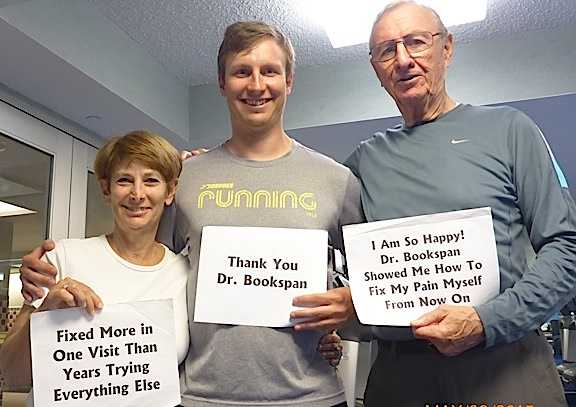
This
family - mother, father, and son - all fixed their pain together with me.
Part
II - Real Core Training
You
do not need to do exercises to fix back pain. Fixing back pain is mostly about
stopping bad bending for all you do all day, stopping bad exercises, and using
good bending and healthy exercise instead. All described above.
Core
and ab exercise cannot stop swayback or change posture. Stronger muscles do
not create any movement. Healthy positioning comes from you doing the needed
movement away from painful slouching, and do not need stronger muscles to
do that.
This
section explains how to use this method to exercise for general health, and
for better abdominal and core exercise that is also healthier for the spine.
A
Little About The Ab Revolution™ To Understand
and Use Neutral Spine:
The
way your core works, is to deliberately move to neutral spine position instead
of swayback (hyperlordosis).
You
do not need stronger abdominal muscles to move your spine to healthy position.
You need the knowledge and practice of what movement to use your abdominal
muscles to do. Strengthening does not make movement or teach
you healthy ways to move.
Healthy
core training means using the healthy spine position to exercise. Keeping
neutral spine uses the abdominal muscles with no tightening and no rounding
or bending forward. The key is that neutral
spine strengthens your abs. It is backward to strengthen your abs hoping that
will automatically give you neutral spine.
I
developed an innovation in core training. Instead of curling forward or doing
a bunch of planks, I developed a system to exercise your abs and back at the
same time, plus show you how you are supposed
to use abdominal muscles to change spine position when you stand up again.
This collective work including many dozens of retraining drills is called
The Ab Revolution™. Some Ab Revolution™ exercise examples follow.
Many more are in the The Ab Revolution™, book,
and in my classes.
My
Ab Revolution teaches you how to use your abdominal
muscles the way you need for real life when standing, moving and living. I
developed more than a hundred Ab Revolution retraining drills. Most of them
are done standing, which is much of how you live your life. Below are three
that are not done standing. They change conventional exercises into effective
retraining drills.
Isometric Abs
THESE
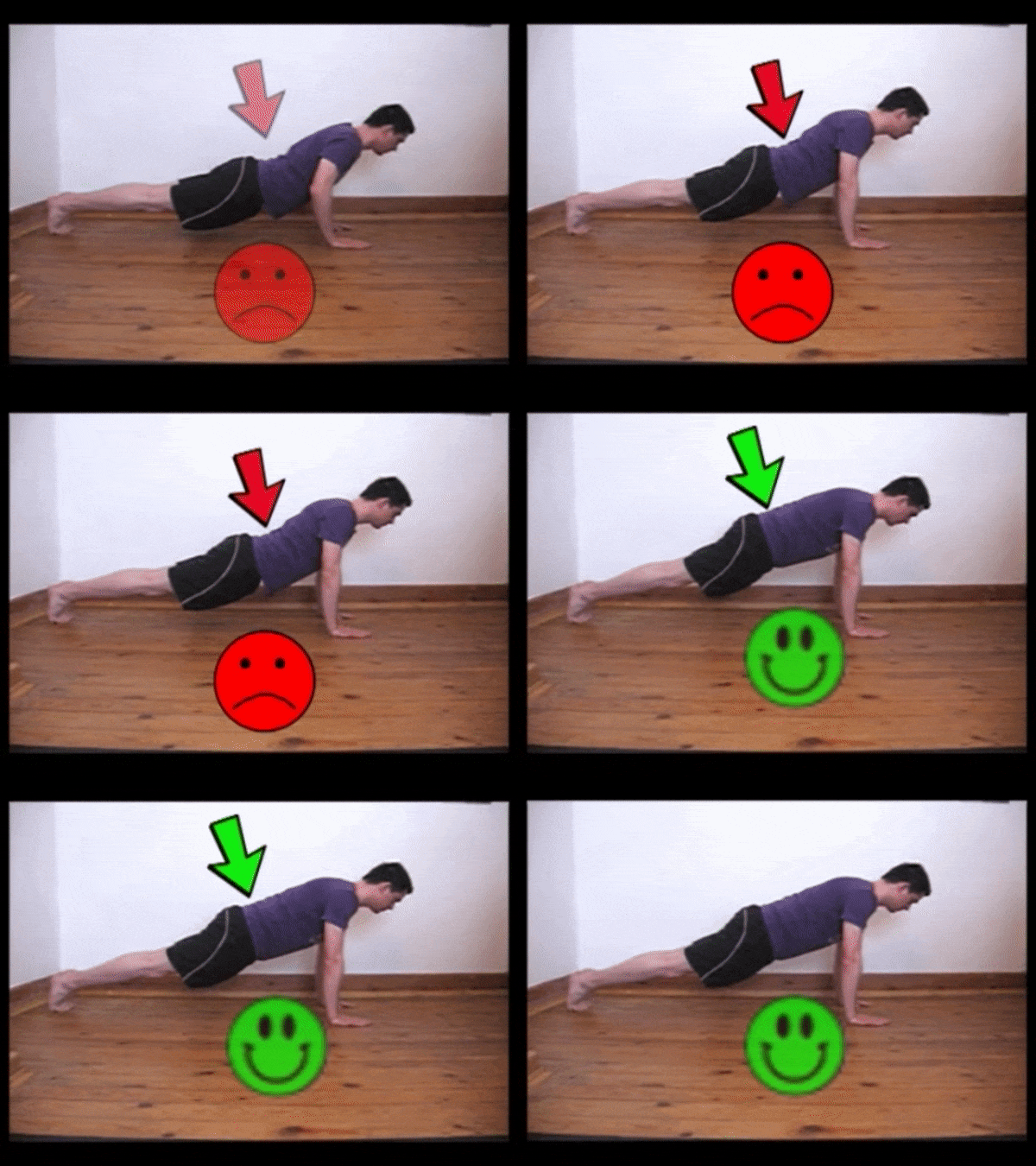
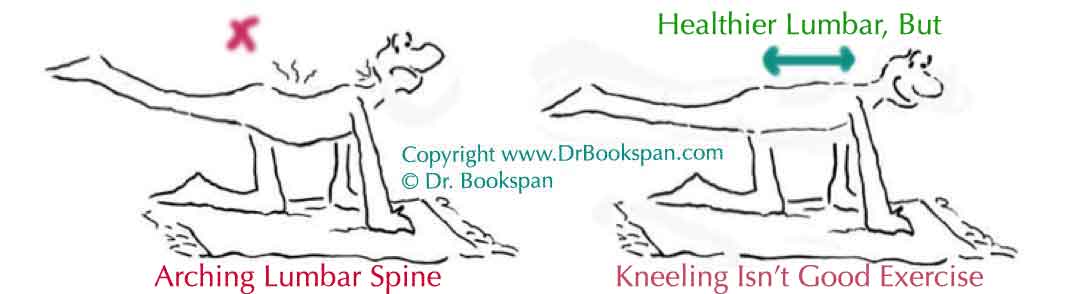
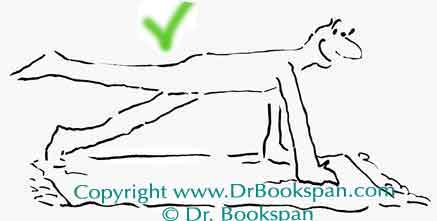
ARE NOT CRUNCHES. This is not an arm exercise. It is not a back pain fix
- by itself. Use this drill to learn how to stop swayback - if you do it
as taught - while you exercise. Then, use the same knowledge when you stand,
and go about your life.
"Isometric
Abs" retraining drill. By itself, it is a great ab exercise (IF you
prevent your lower back from lifting upwards, increasing inward curve).
The benefit to stop back pain comes when you TRANSFER the knowledge of
using this to prevent swayback all the time, when walking, running, and
lifting loads overhead:
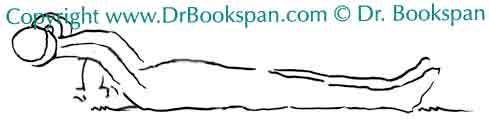
-
Lie face up, arms overhead on floor, arms by your ears holding hand weights
only an inch or two above the floor, one in each hand. Keep legs lying flat
and relaxed on the floor.
-
Notice the common result - most people allow their ribs to lift upward and
the lower spine arches upward off the floor (increasing inward sway).
-
To correct the increased lumbar sway, press your lower back toward the floor.
Feel the change in tilt of the pelvis. You will feel your abdominal muscles
working to do this right. See if you can flatten your back against the floor
without your legs pulling upwards, which indicate tight anterior hip muscles
that needs stretching.
-
Quickly start raising and lowering the weights an inch or two above the
floor, repeatedly. Don't let your lower spine increase in arch. Control
spine position using your abdominal muscles. Done right you will feel your
abdominal muscles working. That is instant feedback - you can feel your
spine move to less sway and you feel your abdominal muscles do it.
-
Notice that each time you lower the weights, it is tempting to allow the
lower back to lift of the floor. Maintain the lower back against the floor,
and feel the lower abdominal muscles work, along with a nice stretch across
the front of the hip as you maintain neutral spine.
-
Your upper body and legs never lift from the floor. Head and neck
stay relaxed.
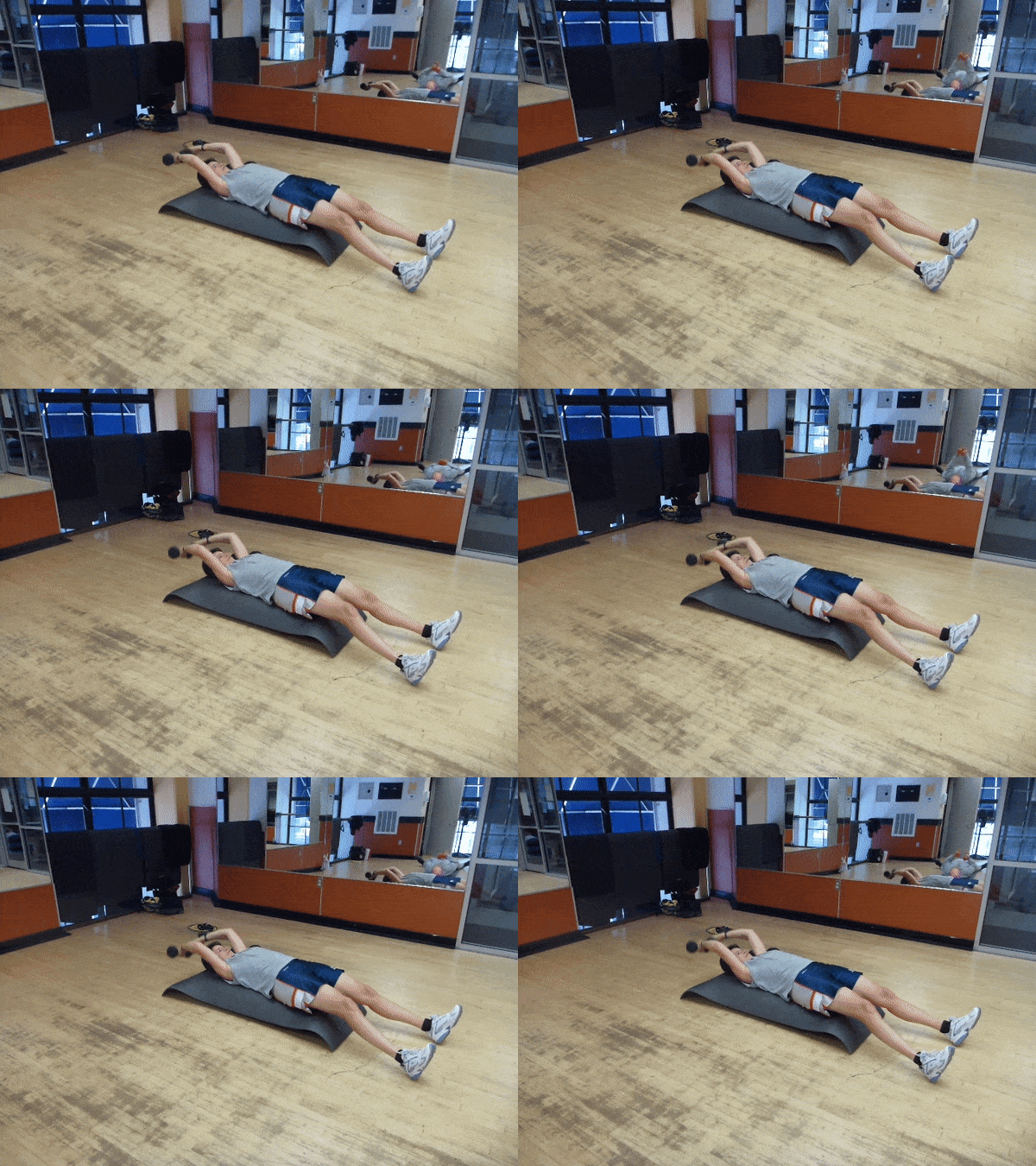
The
gif below shows Isometric Abs as done in my exercise classes to music.
See the short description above to understand why and how to keep this an
abdominal and core exercise and neutral spine retraining drill, not an upper
body exercise alone. Note that the lower back never lifts
or arches. We use a bench to practice this with more stretch to the anterior
hip and arms, while still maintaining neutral spine. In the mirror, you
can also see another student working on chest presses with neutral spine.
A
Short Story of My Work Developing This Method
This
information is not copied from someone else who said it, or something I heard
in a gym or in medical school. I am the scientist who researches what really
happens. I started formalizing this method in the 1970s, of lower back pain
with standing and running, too much inward sway to the lumbar spine, and what
abs really have to do with it. I collected data on students and patients who
used it. I did more studies testing the results and printed the first training
manual (typed actually, from hand printed notes) in 1982. Later work in injury
research for University and Military was preventing back pain from running
and carrying loads. Disease Non-Battle Injuries (DNBI) from exercising in
the gym and doing PT is a huge military issue - grounding far more personnel
than combat casualty. I ran several more studies on overarching (hyperlordosis),
confirming it is a major overlooked cause of lower back pain.
 My
work shows how to understand and reverse the cause of pain for yourself, with
simple repositioning to neutral spine instead of swayback. It was unexpected
news to some, who had been taught lumbar overarch in the gym and deliberately
tilt the hip and backside too far back for exercise, or who lean the upper
body backward thinking that is standing up straighter. For the rest, it was
welcome relief, including for my guys who liked to joke that they were my
STRACguys - combat slang for "Stupid Troops Running Around in Circles."
My
work shows how to understand and reverse the cause of pain for yourself, with
simple repositioning to neutral spine instead of swayback. It was unexpected
news to some, who had been taught lumbar overarch in the gym and deliberately
tilt the hip and backside too far back for exercise, or who lean the upper
body backward thinking that is standing up straighter. For the rest, it was
welcome relief, including for my guys who liked to joke that they were my
STRACguys - combat slang for "Stupid Troops Running Around in Circles."
The
training manual upgraded through several printings to improve layout and photos.
My life's work in stopping pain from injurious spine positioning during life
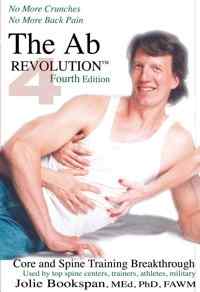
and from conventional exercises became summarized in the book Ab
Revolution™ No More Crunches No More Back Pain, so that you
don't have to suffer any more. The book has
two main parts. PART I shows how to stop lumbo-sacral pain
during various upright activity in daily life, both non-active and active,
such as long standing, walking, running, overhead lifting. It is not exercises
which stop the pain, but stopping the overarching with simple repositioning.
PART II gives ways to exercise in healthier ways using neutral spine - for
all the various exercise you need for health benefits, to improve sports skills,
to learn functional exercise, and for impressive abs if that's what you want.
Don't confuse exercising with the simple PART I retraining that shows you
how to stop a painful overarching habit, but that does not require any exercise
to do it. There is a fun Part III with ab myths, facts, and answers.

![ALT =[“Dr. Jolie Bookspan, researcher in human physiology in extreme environments, clinician in fixing pain and injuries: More on Dr. Bookspan's web page - http://drbookspan.com/research.html"]](images/DrBookspanPhotoName.jpg)



![ALT =[“Healthy Martial Arts by Dr. Jolie Bookspan. Training for all athletes in all sports, body and mind. More on author web site http://drbookspan.com/books”]](images/CoverHealthyMartialArts.jpg)
![ALT =[“Fix Your Own Pain Without Drugs or Surgery by Dr. Jolie Bookspan. Fix causes using scientific methods you can do yourself. Available from author web site http://drbookspan.com/books”]](images/FixPainFrontCover.jpg)
![ALT =[“Stretching Smarter Stretching Healthier by Dr. Jolie Bookspan. Effective quick methods for healthier range of motion during daily life, sports, exercise, and at home. Available from author web site http://drbookspan.com/books”]](images/StretchBookCoverWEB.jpg)
![ALT =[“Health and Fitness in Plain English - How To Be Healthy Happy and Fit For The Rest Of Your Life by Dr. Jolie Bookspan THIRD edition. Available from author web site http://drbookspan.com/books”]](images/CoverH&FLowRes.jpg)
![ALT =[Diving Physiology in Plain English - new eighth edition 2021 with Blue Cover and white text: by Dr. Jolie Bookspan]](images/CoverDivingPhys%20eBookLR.jpg)
![ALT =[“Diving and Hyperbaric Medicine Review For Physicians Board Exam Guide by Dr. Jolie Bookspan. Available from author web site http://drbookspan.com/books”]](images/coverdocbook.jpg)


 HOME
HOME